Articles
Knowledge about personal growth, biology, psychology en energy psychology
The Bio-Computer in the Simulation
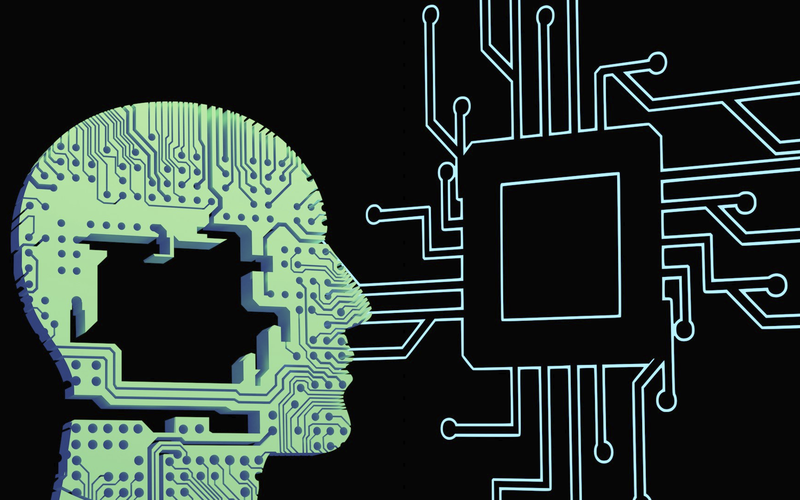
When you look in the mirror, do you see a human being or an advanced information system? In a world increasingly driven by algorithms and AI, the line between biology and technology is thinner than ever. This article takes you on a step-by-step journey through the "System Logic" of your own existence. From the automatic patterns we repeat daily (the Legacy Code) to the reality that we are navigating a virtual simulation. Discover how to reclaim control from the autopilot, clear your internal Dashboard, and once again become the sovereign User of your own bio-computer.
Step-by-step reclaiming control over your own system
Most people are convinced they have a unique personality and make conscious choices every day. But if you examine your daily routine with a magnifying glass, you see something else: a series of automatic reactions. To understand what is truly happening, we must dissect the logic of our own system.
Step 1: Recognizing the Automatism
Look at your morning ritual or the way you grab your phone at the slightest hint of boredom. These are not conscious decisions; they are executed scripts. We must acknowledge that most of our behavior is reactive. We respond to an input with a fixed output. This is the definition of an algorithm. In daily life, we function more like a machine than a free being.
Step 2: The Storage (The Legacy Code)
Where do these patterns come from? This is what we call Legacy Code in IVDAVRA. Much like an AI’s training data, your subconscious is filled with "filler": childhood experiences, school rules, and media noise. This data forms your Subconscious. It is the operating system that determines how you interpret the world without you even realizing it.
Step 3: The Information Interface (The Virtual Reality)
According to the metaphysics of Thomas Campbell (My Big TOE), we do not live in a hard, material world, but in an information-based reality: a Virtual Reality (VR). Just as a video game translates data into images on a screen, your brain (the hardware) translates the data stream of the VR into your experience. The world is the "game engine," and you are the player.
Step 4: The User behind the Avatar
Here we make the most important distinction. If the world is a VR and your body is an avatar (your bio-computer), who are you? You are the User (IUOC - Individuated Unit of Consciousness). The User is the only one who can truly make choices, but often the User sits passively watching the autopilot (the Legacy Code) steer the avatar.
Step 5: The Hack on the Dashboard
Why is it so difficult to take charge? Because the VR is currently flooded with corrupted data (GIGO - Garbage In, Garbage Out). The system tries to pollute your Dashboard (your perception) via the Carrot and Stick (dopamine kicks and fear). As a result, your Decision Space shrinks. You no longer see the exit of the simulation because your screen is full of "error messages" and distractions.
Step 6: The System Audit (Cleaning the Legacy Code)
Cleaning your system is an operational intervention:
- Identify the Loop: Recognize repetitive emotions as "Code" instead of "Me."
- Lower Entropy: Stop the GIGO stream (news, social media noise). Give your processor rest.
- The Observer-Overwrite: Watch your patterns with objective curiosity. Without attention, the code dies off.
- Force a Glitch: Deliberately do the opposite of your script to break the circular reasoning of your software.
Step 7: The System Update
By observing your reactions, you create space. You disconnect the User from the automatism. This is "The loss of the human form." You stop being a victim of your programming and become the programmer. Your Dashboard clears, and you begin to navigate the VR as a sovereign player.
Published 2026-04-17