Articles
Knowledge about personal growth, biology, psychology en energy psychology
Human System Protocol™ (HSP): A Systems-Based Model for Behavior and Change
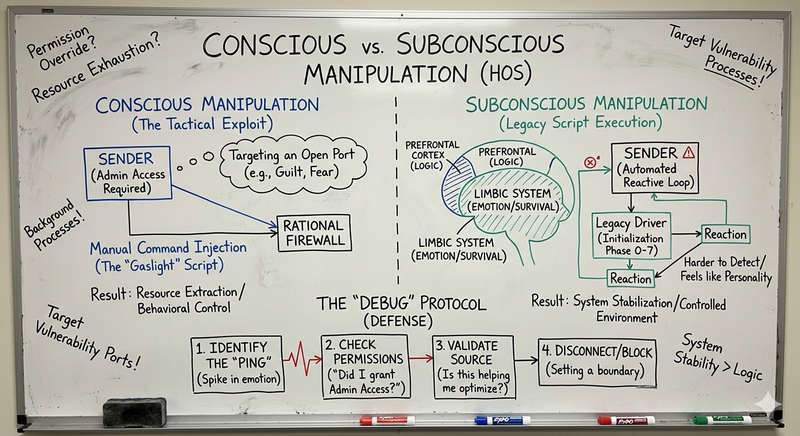
A systems-based model for understanding experience, behavior, and change
Most people try to change themselves by focusing on behavior. They try to think differently, feel differently, or act differently.
But behavior is not where change starts. It is where change becomes visible.
The Human System Protocol™ (HSP) explains:
- how your experience is generated
- why patterns repeat
- and what actually enables sustainable change
See also humansystemprotocol.nl.
0. BIOLOGICAL SUBSTRATE
The system foundation
Before any processing, behavior, or change can occur, the system depends on its biological foundation.
This includes:
- sleep
- nervous system regulation
- hormones
- brain chemistry
- nutrition
- physical health
The system cannot operate above the quality of its biological state.
When the biological layer is unstable:
- capacity decreases
- processing becomes distorted
- emotional signals intensify
- behavior becomes less controllable
In these conditions, change is not blocked by mindset.
It is limited by the system’s physical state.
This means:
You cannot out-think:
- chronic sleep deprivation
- hormonal imbalance
- severe stress or burnout
- untreated physical or mental conditions
The protocol depends on the substrate.
I. SYSTEM MECHANICS
How the system operates
1. Everything Is Processing (Signal Principle)
Your thoughts, emotions, and reactions are outputs of internal processing.
What you experience is generated, not random
Change the processing; the output changes
2. Input Shapes the System (Input Principle)
Your system is continuously shaped by what it consumes:
- information
- environment
- attention
What enters the system determines what can be processed
3. Patterns Are Stored (Pattern Principle)
What repeats is not coincidence, it is encoded.
Recurring experiences reflect stored patterns that continue to run until updated.
What repeats is what hasn’t been processed
4. Capacity Determines Clarity (Capacity Principle)
All processing is limited by system capacity, which is determined by the underlying biological state. Capacity is not only psychological. It is largely biological.
When capacity is exceeded:
- clarity decreases
- distortion increases
- reactivity rises
You don’t always lack insight, you often lack capacity
5. Space Creates Choice (Latency Principle)
Between stimulus and response, there is latency.
- low latency; automatic pattern execution
- increased latency; conscious response
The size of this space determines whether you react or respond
6. Attention Directs Energy (Energy Principle)
Where attention goes, energy follows.
What you focus on strengthens within your system
Energy reinforces patterns
II. CONTROL & RESPONSIBILITY
What you can and cannot control
7. Control Has Limits (Non-Control Principle)
You do not control outcomes, other people, or external systems.
You only control your participation
8. You Are Responsible for Your System (Sovereignty Principle)
You are responsible for your system within your level of access, including recognizing when biological constraints limit that access.
- interpretation
- response
- internal processing
Responsibility is not blame, it is access
9. Context Shapes Options (Constraint Principle)
You don’t always choose the situation—but you choose your participation.
Context limits options
Response remains yours
III. BEHAVIOR & REGULATION
How the system acts in real-time
10. Behavior Requires Structure (Protocol Principle)
In high-pressure states, clarity does not come from improvisation.
Predefined responses outperform reactive behavior
11. Reduce Complexity Under Load (Default Mode Principle)
When overwhelmed, simplify your system:
- fewer words
- neutral tone
- delayed response
- exit if needed
Simplicity stabilizes the system
12. Regulate Now, Update Later (Arena Principle)
There are two phases:
- real-time; regulate the system
- post-event; process and update
Don’t try to analyze while activated
13. Clarity Is Clean Participation (Integrity Principle)
Integrity is not control or distance.
It is:
- grounded presence
- non-reactive engagement
- aligned action
IV. CONNECTION & INTERACTION
How systems relate to each other
14. Connection Requires Capacity (Connection Principle)
High-quality interaction requires both systems to have capacity.
Connection emerges when distortion is low
15. Distortion Creates Conflict (Distortion Principle)
Conflict is often not disagreement but reduced clarity.
As capacity drops and emotional load rises:
- assumptions increase
- misinterpretation grows
Distortion replaces clarity
16. Trust Builds Through Consistency (Investment Principle)
Connection develops through repeated low-distortion interactions.
Consistency builds trust, not intensity
V. CHANGE & DEVELOPMENT
How the system evolves
17. Change Is Systemic (Update Principle)
Your system changes through integration, not intention.
Real change requires:
- repetition
- emotional processing
- system-level integration
Change requires not only psychological integration, but sufficient biological capacity to support it.
Insight alone does not create change
18. Repetition Creates Automaticity (Training Curve Principle)
What starts as effort becomes automatic through repetition.
Practice turns conscious behavior into default patterns
19. Allow Signals, Structure Behavior (Allowance Principle)
Internal signals are allowed. External behavior is structured.
Feelings are not suppressed
Reactions are not blindly executed
VI. CONTEXT & ADAPTATION
How the system relates to environment
20. Systems Adapt to Environment (Environment Principle)
Your system is not isolated.
Behavior is influenced by:
- context
- social systems
- physical conditions
The system continuously adapts
CORE SYNTHESIS
The Human System Protocol™ (HSP) is built on fundamental truths:
- Everything is processing
Your experience is generated, not random. - Access defines control
You can only change what you have access to. - Change is systemic
Real change happens through integration, not force. - The substrate defines the limits
The system cannot function beyond its biological foundation.
PRACTICAL ORIENTATION
Instead of asking:
“What’s wrong with me?”
Ask:
“What is my system doing right now?”
“What input is driving this?”
“Where do I have access?”
“What needs to be updated?”
When HSP Does Not Work
HSP is a systems model, not a universal override.
There are conditions where the protocol will not produce change:
- severe biological dysregulation (sleep, hormones, illness)
- extreme or chronic stress
- active addiction or substance dependence
- acute mental health conditions
- environments that continuously reinforce threat
In these cases, the system is not resistant.
It is constrained beyond functional range.
The goal is not to push harder.
Common Misinterpretation
HSP is not an excuse to avoid responsibility.
Understanding system constraints does not remove accountability. It clarifies where action is possible.
The goal is not to justify behavior...
but to understand how to change it
Example
You want to speak up in a meeting.
You don’t.
This could be:
- capacity constraint; you’re exhausted
- processing constraint; you don’t fully understand your own position
- activation constraint; speaking feels unsafe
- input constraint; you assume negative reactions
Same behavior, different system causes
FINAL NOTE
Most people are not failing at life.
They are running systems that cannot produce the outcome they want.
This is not a belief system. It is a systems model.
It does not tell you who to be. It helps you understand:
- how your system works
- how to work with it
- how to evolve it
And where its limits currently are.
Change does not fail because you are incapable.
It fails when the system conditions are insufficient.
Sometimes those conditions are psychological.
Sometimes they are biological.
Published 2026-05-03