Articles
Knowledge about personal growth, biology, psychology en energy psychology
Behavior reveals beliefs, Transactional Analysis

"Behavior reveals beliefs" is a powerful, concise summary of a core principle in psychology and human development: what you do is a far more accurate reflection of what you truly believe than anything you say.
This phrase acts as a simple translation key: if you want to understand someone's fundamental worldview, their core assumptions about themselves, others, and the world, you must look at their actions, especially when they are under stress or facing conflict.
The Disconnect Between Talk and Action
We often maintain a set of stated beliefs (what we say we believe, our conscious values) and a different set of operative beliefs (what we act on).
- Example: A person might state, "I believe in teamwork and delegation" (stated belief). But if they continually micro-manage their team and redo others' work (behavior), their revealed belief is, "I believe others are incompetent, and I can only trust myself."
Beliefs as Internal Drivers
In psychology, beliefs function as internal drivers that guide unconscious decision-making. Your behavior is the visible output of your internal system trying to stay safe, efficient, or consistent with its deep-seated programming. When you act, you are essentially confirming your internal narrative.
- If you believe: "I am not worthy of success," your behavior might be procrastination, self-sabotage, or quitting just before reaching the goal.
- If you believe: "Conflict is dangerous," your behavior will be avoidance, people-pleasing, or emotional withdrawal.
The Role of the Subconscious
Many of the most powerful beliefs that govern behavior are subconscious and formed in childhood. These beliefs act as shortcuts for navigating the world (e.g., "If I am quiet, I am safe").
- You may consciously believe you deserve a raise, but if your subconscious belief system says, "Asking for what I want is selfish and leads to rejection," your behavior will be silence during salary reviews. Your actions, or lack thereof, reveal the hidden belief.
Connection to Transactional Analysis (TA)
This principle is fundamental to TA, specifically linking the underlying Scripts and Injunctions to observable Games and Drivers:
- Script Beliefs: Your life Script (the unconscious life plan) is built on deep-seated beliefs about life being fair, hopeless, or winnable.
- Behavior Revelation: The repetitive nature of Games (like "Why Don't You... Yes But") and the compulsive nature of Drivers (like "Be Perfect") are the behavioral evidence that a limiting, subconscious belief is operating. The behavior of constantly starting projects but never finishing them reveals the belief that "effort is good, but final success is dangerous."

History Transactional Analysis (TA)
Transactional Analysis (TA) is a psychological theory and method of therapy developed by Eric Berne to understand human behavior, communication, and relationships. It is based on the idea that we each operate from three internal ego states: Parent (values and rules), Adult (rational, present-focused), and Child (feelings and early experiences). These ego states influence how we interact with others in what Berne called transactions.
A key concept in TA is psychological games, repetitive, unconscious patterns of interaction with hidden motives, which usually end in negative feelings. Games often follow the structure of the Drama Triangle, where people unconsciously shift between three roles: Victim, Rescuer, and Persecutor. These games reinforce a person’s life script, a deep, often unconscious narrative developed in childhood that shapes life choices and behavior.
Life positions are another core idea, reflecting a person’s basic beliefs about themselves and others. The healthiest position is “I’m OK, You’re OK”, but many people operate from less balanced views like “I’m not OK, You’re OK”.
Through TA, individuals can become aware of these patterns, change unhelpful scripts, and move toward more authentic, constructive communication and relationships.
Ego States
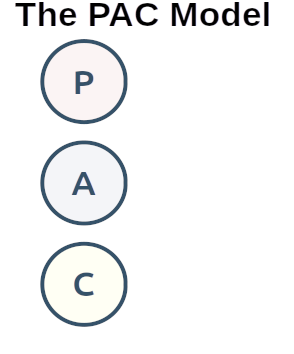 You constantly carry three "yous" around. The Parent is your internal tape recorder of all past rules and judgments ("Finish your plate, there are starving kids in..."); the Child is your emotional, impulsive toddler who wants candy now and is afraid of spiders; and the Adult is the dull, logical computer in the middle that processes facts and tries to mediate ("Factually, we have only 5 minutes left before the deadline, so let's save the candy for later.").
Transactions
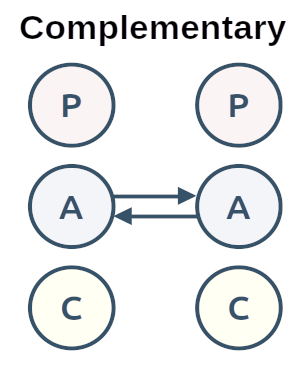 This is the basic unit of communication: a stimulus from one Ego State and a response from another. A smooth transaction is complementary (e.g., Adult asks: "What's the time?", Adult answers: "It's 2:00 PM."), but things get spicy with a crossed transaction (e.g., Adult asks: "What's the time?", to which the other person snaps from their Defensive Child state: "Why do you always ask me that?!").
Games
A Game is a series of repetitive ulterior transactions (hidden agenda) that inevitably end with a predictable, negative Payoff (a bad feeling) that feeds your Rackets. The classic example is "Why Don't You—Yes But," where the person with the problem rejects every suggested solution only to frustrate the helper, thereby proving: "See? No one can help me."
Drama triangle
 The Drama Triangle, developed by Stephen Karpman, is a psychological model that describes a common and destructive pattern of interaction between people. It consists of three roles: the Victim, the Rescuer, and the Persecutor.
| Role | Description |
|---|---|
| Victim | The Victim feels helpless, oppressed, or powerless. They often believe they can't solve their problems and look for someone to save them. |
| Rescuer | The Rescuer steps in to “help” the Victim, often without being asked, believing the Victim can’t cope alone. This help is usually not truly empowering and can reinforce the Victim's dependency. |
| Persecutor | The Persecutor criticizes, blames, or controls others. They may appear strong, but their role is driven by anger, fear, or insecurity. |
People often switch roles within a single interaction. For example, a Rescuer might become a Victim when their help is rejected, or a Victim may turn into a Persecutor when they feel misunderstood.
The Drama Triangle is closely tied to games in Transactional Analysis, repetitive, unconscious interaction patterns with hidden motives. It also reflects unhealthy life positions (e.g., “I’m not OK, you’re OK”) and reinforces old life scripts.
Recognizing the Drama Triangle is the first step in stepping out of it, toward honest, responsible, and adult-to-adult communication.
Strokes
A Stroke is any unit of recognition or attention we exchange, whether it's a compliment, a pat on the back, or even a shouted reprimand. We seek them all day long because Berne noted that negative attention (a negative stroke) is often better than no attention at all, which explains the baffling tendency some people have to pick unnecessary fights.
Life Positions
These are the fundamental, early-life assumptions about self and others. The healthy goal is I'm OK, You're OK, which means: "I am a person of value, and so are you. Let's work together, even if you are occasionally annoying." The other three (e.g., I'm OK, You're Not OK) are unhealthy stances that push you to blame or play the victim.
In Transactional Analysis (TA), life positions are fundamental beliefs people hold about themselves and others, usually formed early in childhood. These positions influence how we relate to the world and shape our behavior, emotions, and relationships.
There are four basic life positions:
| Lifeposition | Beschrijving |
|---|---|
| I'm OK, You're OK | This is the healthiest position. The person sees themselves and others as fundamentally worthy and capable. It fosters mutual respect, open communication, and growth. |
| I'm OK, You're not OK | This position often leads to arrogance, criticism, or controlling behavior. The person maintains a sense of superiority, possibly as a defense against early feelings of rejection or inadequacy. |
| I'm not OK, You're OK | Common in people who feel inferior or dependent. They may seek validation, approval, or rescue from others, reinforcing victim-like behavior. This position is often linked to many psychological games. |
| I'm not OK, You're not OK | This is the most pessimistic and hopeless position. It can lead to withdrawal, depression, or apathy, with the belief that life has no meaningful solutions. |
These life positions underpin the roles we take in the drama triangle, the games we play, and the life scripts we follow. Awareness of our default position is the first step toward change and healthier relationships.
Injunctions
These are the deepest, often non-verbal, negative commands or prohibitions we received as children from our caregivers that form the foundation of our life's drama. Think of them as the anxious whispers telling you "Don't Be," "Don't Feel," or "Don't Succeed." They are the gremlins that trip you up just when you're about to be successful.
Drivers
These are high-pressure, conditional commands you impose on yourself in an attempt to gain approval, especially under stress. They are often the source of your frantic exhaustion. Your Be Perfect driver makes you spend hours on an email that should take 5 minutes, while your Hurry Up driver compels you to drive aggressively to save 30 seconds.
Rackets (Substitute Feelings)
Rackets are the substitute feelings (e.g., chronic sadness, perpetual anger) we learn and repeat because our authentic emotions (like genuine anger or grief) were discouraged in childhood. You collect them like "stamps" (negative emotions) that you cash in one day for a major outburst or destructive decision, all to validate your Script (e.g., you always feel "anxious" when you are actually "angry" about an injustice).
Scripts
The Script is the unconscious, predetermined life plan or storyline you wrote in early childhood, based on the Injunctions you received. It's the unconscious belief about how your life will end (e.g., as a Winner, a Loser, or "Just-Someone-Who-Gets-By").
The goal of TA is to rewrite this outdated script using your Adult Ego State so you stop creating drama to make your old predictions come true.
Published 2025-11-17